BASS CAT
Melody CatsMusic
3.911.00 Reviews
- Version
- 3.4
- Installs
- 10.00K
- Age Rating
- Everyone
Screenshots
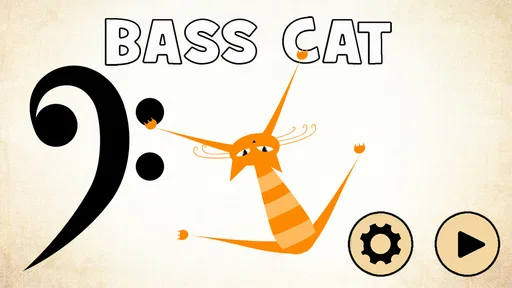
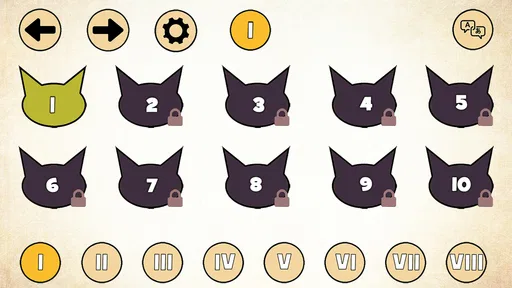
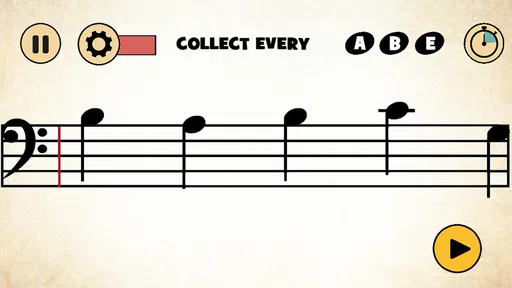
Our Review of BASS CAT
 Analysis by Appyee
Learning the bass clef can feel unnecessarily slow when the only tool available is a printed exercise book. I found BASS CAT more approachable than that kind of practice because it turns note recognition into a short music game. Its focus is narrow: helping you identify notes on the bass staff quickly. That limited purpose is also its main strength, since it does not try to become a full instrument course or a general music playground.
In my experience, the game makes the most sense for a household where someone is beginning piano, keyboard, cello, trombone, tuba, or another instrument that regularly uses the bass clef. A child can take a few turns, then a parent or sibling can use the same device for a quick practice session. It is not a shared social game, and I would not treat it as a replacement for a teacher, but it can make an otherwise repetitive part of music study easier to fit into an ordinary day.
How BASS CAT works as a shared practice game
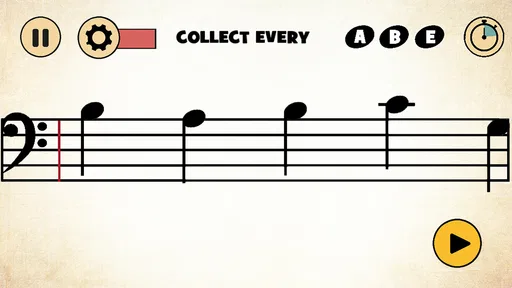
The basic idea is refreshingly direct. Notes appear in bass-clef notation, and the player has to identify them quickly. That puts the emphasis on recognition rather than on reading an explanation and then moving on. The useful skill here is not merely knowing that a note has a particular name; it is becoming comfortable seeing its position on the staff without stopping to count every line and space.
That distinction matters for beginners. At first, a learner may remember notes through slow rules or mnemonics. Those methods have their place, but they can become a bottleneck when reading real music. A short game session gives the learner a chance to move from conscious calculation toward faster visual recall. I would use it after a lesson or before playing, not as the only form of study.
The game’s music category is a good fit, although it feels more like a focused ear-and-eye training aid than a broad music game. The developer, Melody Cats, has kept the concept small enough to understand immediately. You do not need to learn a complicated interface before reaching the actual exercise, which is especially helpful when a younger player is sharing a phone or tablet with an adult.
For a realistic household routine, I would keep the device in a common area and use it for a few turns while someone is waiting for a lesson, warming up at the keyboard, or taking a break from written theory. One person can play while another listens or checks the answer afterward. That arrangement works because the activity is easy to observe, even though the game itself is still an individual practice tool rather than a multiplayer experience.
Why the narrow focus can be useful
Many music-learning alternatives try to cover rhythm, notation, ear training, instrument technique, songs, and theory in one package. That breadth can be valuable, but it can also hide the exact weakness a learner needs to fix. If bass-clef recognition is the problem, a specialized game removes distractions and makes the practice target obvious.
I especially like the possibility of using it as a bridge between paper and performance. A student might first name notes slowly from a worksheet, then use the game to build speed, and finally return to a beginner piece. The game does not teach the whole piece or explain musical phrasing, but it can help remove one small obstacle that makes the printed page feel intimidating.
There is a trade-off. Someone who already reads bass clef comfortably may find the experience too basic or too repetitive. A player looking for songs, accompaniment, recording tools, or instrument feedback should choose a broader music app instead. BASS CAT is at its best when the goal is specific enough to say in one sentence: “I need to recognize bass-clef notes faster.”
Setting expectations on a shared device
The listed price is $2.49, so I would think of it as a small paid practice purchase rather than a free family game. That can be a positive choice for a shared device because the household is deciding upfront whether this focused activity is worth having available. It also makes the app easier to evaluate on its actual usefulness instead of judging it by how much advertising or extra content it provides.
At the same time, one purchase should not be confused with separate learner accounts. I would not expect the app to divide progress between siblings, preserve individual practice histories, or create a teacher dashboard unless those functions are explicitly available in the current installation. For a family, the practical approach is to agree on how the device will be used and let each learner keep track of their own goals outside the game.
This boundary is important when two children are at different stages. A beginner may need slow, patient recognition, while an older student may want speed. If the game presents the same activity to everyone using the device, the family can still adapt the routine by giving each person a different purpose: one learner can concentrate on accurate naming, while another can treat the session as a quick speed check. That is a household strategy, not a feature I would attribute to the app.
I also recommend deciding in advance whether the game belongs in practice time or free time. A child may see any game format as entertainment, while a parent may expect measurable study. A simple agreement avoids friction: play for a short, defined turn, then connect the result to the instrument lesson. The app is more useful when everyone understands that it supports music practice rather than replacing it.
Coordinating practice without overcomplicating it
Because the activity is compact, it can fit into a rotation. One person can use the device while another gets the music books ready, and then the device can be put away before instrument practice begins. In a busy home, this is more realistic than promising a long daily session. The goal is consistency, not turning every note exercise into a formal event.
A helpful technique is to separate recognition from correction. If a learner misses a note, I would avoid immediately giving the answer and moving on. Instead, I would ask them to locate the note on a printed staff or on the instrument, then try to name it again. This makes the game the prompt for a short teaching moment. The app supplies repetition; the adult supplies context.
Another useful routine is to alternate independent and supported turns. During an independent turn, the learner answers without help. During a supported turn, a parent or sibling can ask what visual clue the player used: a line, a space, or a nearby reference note. That conversation reveals whether the player is truly reading the staff or guessing from memory. It is a small but important distinction that a score alone may not show.
For siblings, I would avoid making the fastest response the only measure of success. Speed can motivate an experienced learner, but a beginner who is still building accuracy may become discouraged by direct comparison. A better arrangement is to compare each person with their own previous comfort level. Since the game targets a single skill, the family can discuss whether reading feels less hesitant during actual music, which is a more meaningful outcome than winning a turn.
There is also a practical device-sharing issue. If the household uses one phone or tablet for many purposes, the learner may lose momentum when notifications, incoming messages, or another person’s schedule interrupts the session. I would use a quiet moment and hand the device over only when the player is ready. That is not a BASS CAT setting; it is simply the difference between a focused exercise and a distracted one.
Age, trust, and the role of an adult
The content rating is Everyone, which makes the game suitable for a broad age range in principle. For younger children, suitability still depends on the family’s expectations around screen time and independent use. The musical task is benign, but a child may need help understanding the notation and may not know whether an incorrect answer reflects a memory problem, a counting mistake, or a rushed response.
I would introduce it beside the child rather than handing over the device with no explanation. Show how the bass clef relates to the notes they are learning, then let the child answer independently. This keeps the activity connected to real music and prevents the game from becoming a disconnected guessing exercise. It also gives the adult a chance to notice whether the learner is enjoying the challenge or simply pressing through it.
Trust matters in shared-device use because the game may be installed alongside personal apps, schoolwork, and family accounts. I would keep the boundaries simple: use the app during an agreed period, do not assume another person’s practice history represents your own, and return the device when the turn ends. Nothing about a music game should require a household to blur personal account boundaries or share unrelated information.
Older learners may use it more independently. A teenager preparing for bass-clef reading can fit a short session between homework and instrument practice, then decide whether the exercise is helping with actual scores. If it is not improving practical reading, I would reduce the game time and spend more of the session playing real music. Recognition drills are useful only when they transfer to the page.
Adults can benefit too, especially parents who want to understand what a child is studying. A parent does not need to be an accomplished musician to ask useful questions. “Which notes were hardest?” or “Can you find that note on the keyboard?” turns the app into a shared learning prompt. That kind of involvement is more valuable than monitoring a number without discussing what the learner is doing.
What it can and cannot replace
Compared with flashcards, BASS CAT has the advantage of putting the learner under a little time pressure. Flashcards are excellent for slow recall and explanation, but they do not always encourage the quick visual response needed when reading a line of music. The game can therefore serve as a second step after flashcards, when the learner already understands the note names but needs more fluency.
Compared with a full music-learning platform, it is much less comprehensive. A larger app may teach rhythm, listen to playing, follow songs, explain theory, or track a structured course. Those options are better for someone who wants one central place for a complete curriculum. Choosing this game instead makes sense when the learner already has lessons or another course and needs a compact bass-clef supplement.
Compared with a teacher, it offers repetition but not diagnosis. It cannot replace a teacher noticing posture, fingering, rhythm, tension, or a misunderstanding in the way a human can. The best use is complementary: the teacher introduces the concept, the learner practices recognition independently, and the next lesson checks whether that practice helped.
Compared with ordinary games, its appeal is educational rather than expansive. There is no reason to choose it for story, exploration, or a large variety of challenges. I would recommend it to someone who enjoys small skill-building exercises and is willing to repeat a focused task. I would skip it for a player who needs constant novelty or expects a music game to feel like an interactive performance.
Version, platform fit, and the buying decision
The current version is 3.4, and the minimum operating-system requirement is 10. That makes checking the intended phone or tablet worthwhile before buying, particularly on an older shared device. A family may have a newer personal phone but an aging tablet reserved for children, so compatibility should be considered for the actual device that will hold the game.
The game has been available since August 29, 2012, and its continued presence gives it the feel of an established, long-running niche title rather than a newly launched music product. Its average rating is 3.9 from over eighty ratings, with eleven written reviews. I read that as a sign to keep expectations measured: there is enough user feedback to show interest, but not enough to treat the rating as a definitive verdict for every learner.
It has passed ten thousand installs, which suggests that the idea has found a modest audience without making it a mainstream household name. I would not choose it because of popularity. I would choose it because the bass-clef problem is real in your home, the price is acceptable, and the supported device meets the requirement.
Before purchase, I would answer three practical questions. Is the learner currently working with bass clef? Will the game be used often enough to justify a paid download? And does the household already have a broader music app that covers this same exercise well? If the answer to the first two is yes and the third is no, the focused design becomes a reasonable advantage.
My household verdict
I see BASS CAT as a useful little specialist rather than a complete music-learning solution. It earns its place on a shared device when someone needs faster bass-clef recognition and the family is willing to connect game sessions with real notation and instrument practice. The narrow scope keeps the activity understandable, and that can be exactly what a beginner needs when a full course feels overwhelming.
I would recommend it most strongly for a beginner who already has access to lessons, a keyboard, or printed music and needs extra repetition between sessions. I would also consider it for a parent and child who want a short, low-pressure activity they can do together. The best results will come from using it deliberately: brief turns, occasional discussion, and a return to actual music afterward.
I would skip it for anyone seeking songs, performance feedback, rhythm training, or a complete curriculum. I would also be cautious about buying it for several children if separate progress tracking is essential, because the shared-device arrangement requires the family to manage its own boundaries. For those needs, a broader platform or teacher-led method is likely a better fit.
Overall, Melody Cats has made a focused tool that can turn one dull part of music study into something more inviting. It will not solve every notation problem, and its value depends on regular use rather than novelty. But when the specific challenge is recognizing bass-clef notes quickly, I think this paid game is worth considering as a small, practical addition to a household music routine.
Verdict
Strengths of BASS CAT
- Simple controls make it easy to start playing immediately.
- Catchy bass-focused music creates an enjoyable arcade atmosphere.
- Short rounds are convenient for quick gaming sessions.
- Bright visuals and animated effects give the game personality.
- Progression encourages players to improve their timing and accuracy.
Limitations of BASS CAT
- Gameplay may feel repetitive after extended play sessions.
- The difficulty can become frustrating for players who dislike precision games.
- Limited content may reduce long-term replay value.
- Frequent sound effects can become distracting at higher volumes.
- Performance may vary on older devices or models with limited hardware.
Other Releases by Melody Cats
View All
TREBLE CAT
Music4.3
Similar Picks in This Category
View All
Tiles Hop Music & Ball Game
AMANOTES PTE. LTD.4.3

Magic Tiles 3™ - Piano Game
AMANOTES PTE. LTD.4.6

Real Piano
Bilkon3.7

Piano Game: Classic Music Song
Dream Tiles Piano Game Studio4.0

Smash Colors: Music Ball Rush
BADSNOWBALL HONGKONG LIMITED4.2

Piano Music Go-EDM Piano Games
Joy Journey Music Games4.5
Frequently Asked Questions
What is BASS CAT and how does the game work?
BASS CAT is a music-focused game built around bass performance, rhythm, and timing. After installing it, players typically interact with musical challenges by following the beat, matching notes, or completing performance-based tasks. Its appeal comes from combining a playful presentation with bass-driven gameplay, making it suitable for casual sessions as well as players who enjoy rhythm games and music-themed experiences.
Is BASS CAT free to download and play?
BASS CAT can generally be downloaded without an upfront purchase, although the exact payment model may depend on the Android or iOS version available in your region. Before installing, check the store listing for information about advertisements, optional in-app purchases, premium content, or other limitations. This is especially important if the game is intended for children or if you prefer a completely uninterrupted experience.
Does BASS CAT require an internet connection?
The basic gameplay experience may be available without a constant internet connection, but some functions can depend on online access. Features such as downloading additional content, displaying advertisements, synchronizing progress, accessing rankings, or receiving updates may require connectivity. It is worth opening the game once while online and checking which modes remain accessible offline before relying on it during travel or in areas with limited service.
Is BASS CAT suitable for beginners who do not play bass?
Yes, BASS CAT is approachable even if you have never played bass or used a rhythm-based music application. The game is designed around accessible interactions rather than requiring real musical training. Beginners may need a short time to understand the timing and controls, but the learning curve should feel manageable. Players with musical experience may still appreciate the added challenge of improving accuracy and performance.
What devices are compatible with BASS CAT, and what should I check before downloading?
Compatibility depends on the version published for your device, so review the official Google Play or App Store listing before downloading. Check the required operating-system version, available storage, controller or audio permissions, and whether the game is optimized for your phone or tablet. Older devices may experience slower loading, reduced visual performance, or less responsive controls, particularly during demanding musical sections.
Play our best games!


